It is essential for professional notaries to choose a bank with excellent checking account features that will keep their business running efficiently as well as effectively. Getting a business checking account is usually one of the first steps for a notary entrepreneur. It gives you easy access to your cash as well as many other advantageous features.
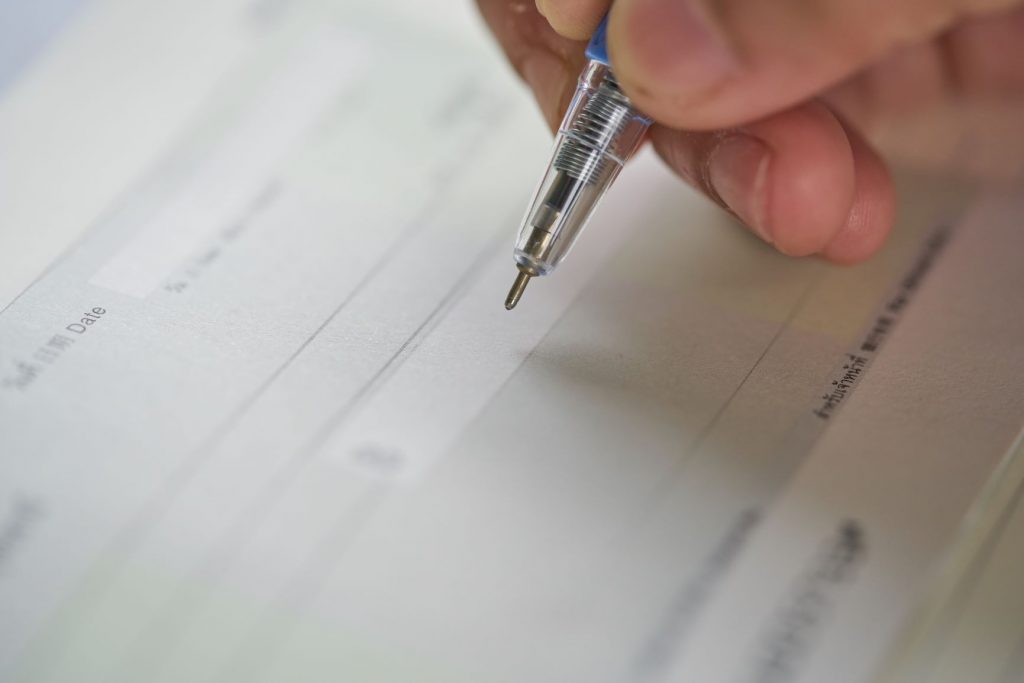
With so many options out there (credit unions & banks), where do you start if you are a new notary or if you are a seasoned notary that wants to compare options? Let’s first start with a basic question:
WHAT IS A CHECKING ACCOUNT?
A checking account is a type of bank account that allows you to easily deposit and withdraw money for your daily transactions. Conveniently having access to that money through writing checks, paying with a debit card connected to that account, getting cash out at automated teller machines (ATMs), or transferring money online is essential to notary entrepreneurs. Checking accounts are typically insured by the federal government through the Federal Deposit Insurance Corporation (FDIC). This means if for any reason your financial institution fails, the FDIC will reimburse you for the money in your checking account up to at least $250,000. Because of this, a checking account is one of the safest places you can put your cash, as long as the financial institution you choose is insured by the FDIC.

WHAT DO I CONSIDER WHEN CHOOSING A CHECKING ACCOUNT?
FEES
Financial institutions need to cover their expenses, and one way to do so is to charge fees. Like most financial products, checking accounts charge various fees to access your money. Fee can range from monthly service/maintenance fee, overdraft fee, non-sufficient (NSF) fee, and ATM fee. Don’t assume that all banks and credit union fees are alike (this is a common mistake made by notary entrepreneurs). Compare policies with several financial institutions before making a decision on a business checking account. Some checking accounts work in favor of how notary entrepreneurs conduct business. Doing your research could save you thousands of dollars each year.
MINIMUM BALANCE REQUIREMENTS
Many checking accounts require you to maintain a certain balance in order to avoid fees. This minimum monthly balance can vary widely depending on the bank and the features associated with the account, so make sure to only sign up for a checking account with a minimum monthly balance that you know you can safely maintain.
ATM NETWORK
Most checking accounts come with a debit card that allows you to withdraw cash from ATMs throughout the country. If you often pay with cash, you’ll need to use an ATM and/or visit a branch location to withdraw money. While this is an incredibly convenient way to get money quickly when you need it, there’s a good chance you’ll be charged a fee for withdrawing cash from an ATM that isn’t part of your bank or credit union’s own network of ATMs. Make sure you have a good understanding of the financial institution’s ATM policies on where you can conduct your transaction and what the fees are.
INTEREST RATES AND REWARDS
Checking accounts aren’t built to hold large amounts of money for long term goals so interest rates on these accounts are typically quite low. Checking accounts that do earn interest usually come with higher minimum monthly balances or fees. It may pay off to find out if opening a checking account at certain institutions have rewards like a cashback program that you can take advantage of.
MOBILE APP FEATURES
Choosing the right checking account is about more than just the financial terms. As a notary entrepreneur, you should also consider what mobile app features are offered. If you do a lot of general notary work, oftentimes your customer may want to pay you with a personal check. Having a mobile app that can help you seamlessly deposit checks right at the signer’s location in front of them is a huge advantage as a notary entrepreneur.

Amplify Your Notary & Signing Agent Business
By Daniel C. Lewis & Jocelyn Waters
In this exceptional Ebook, the authors give you the tools to market and thrive in the notary industry. It is masterful writing for anyone considering to go into this field as well as anyone that is a seasoned notary entrepreneur. This amazing Ebook has it all.
Checking accounts are safe, easy to open and easy to use. Checking accounts do have some drawbacks — they earn little to no interest, and fees can be quite high if you’re not careful. They do, however, provide a major convenience in today’s modern world when it comes to paying bills or getting cash. Do your research and open a checking account that will provide you with the best options and make your life easier.
Developing financial literacy is critical for the successful notary entrepreneur.